






NOTICE: It has been confirmed that Talladega College has now hired a health professional named Ashley Muhlenkamp. We are very happy to welcome Ashley to the Dega Family; however, we would still like to highlight and synopsize the issues students were facing when we did not have a hired health professional. As students, our voices deserve to be heard.
“TC has got to do better with providing resources and taking care of our students and faculty.” — Anonymous Student
The cornerstone of a flourishing education is a healthy and able-bodied student. But without a trained healthcare provider assisting behind the scenes, that foundation begins to crumble.
Talladega College currently does not have a nurse or doctor on campus, leaving students without immediate access to medical care. This absence raises serious concerns about student health, safety, and emergency response—especially during sudden illness or injury. Without professional healthcare support, students are forced to seek treatment off campus—if they’re even able to—at their own expense and inconvenience. Weighed down by financial stress and needless obstacles, students are beginning to ask with growing urgency: When will a healthcare professional return to campus? And what’s being done to safeguard their well-being in the meantime?
A Small Town with Big Health Gaps
Let’s get something understood: Talladega is a very small county—essentially a rural area, its own little city if you will. There are few healthcare facilities nearby, and the nearest hospital, Baptist Health Citizens Hospital, is roughly a seven- to fifteen-minute drive from campus.
While that might not sound far, consider the fact that many students don’t have transportation. Add to that the low ratings of nearby facilities—would you really trust a hospital with a two-star rating? For reliable care, students often have to travel to Oxford (30 minutes away) or Birmingham (an hour away), which isn’t always an option.
And let’s not forget—students aren’t the only ones in need of care. Faculty and staff members face the same lack of access.
From Infirmary to Absence: A Look at Our History
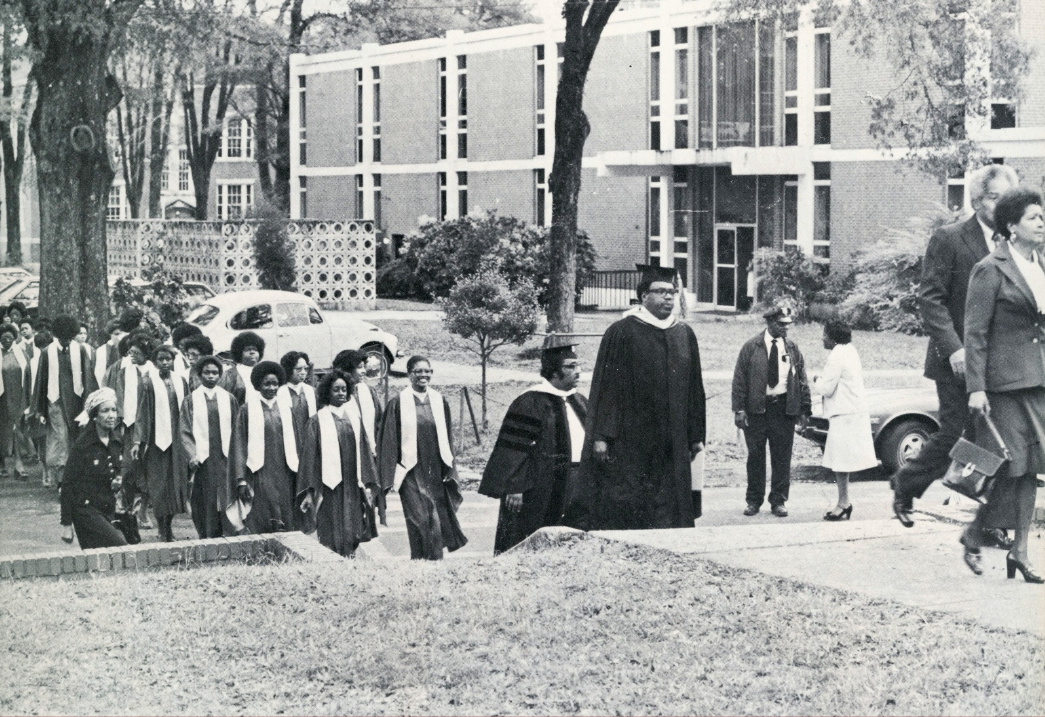
It’s ironic that Talladega is facing this healthcare gap now, considering the college’s long history of providing medical care on campus. The Goodnow Fine Arts Building was originally constructed between 1909–1910 as an Infirmary—the first and only hospital in Talladega until 1943.
The infirmary was once home to Dr. Elisha H. Jones (1883–1963), who served as head physician while running his own practice where the Campus Police Station now stands. Throughout the early 20th century, several other trained doctors and nurses served the college, including Dr. W.H. Brothers, Dr. A.M. Brown, and Dr. W.R. Brown.
So, knowing that Talladega College once had no issue providing healthcare for its students, the question becomes: why don’t we have it now?
A Silent Update
Since the writing of this piece, it has been alleged that a nurse has been hired. However, that information—and the accessibility of any new healthcare resources—has not been made public to students.
We reached out to the Dean of Students for clarification but were unable to make contact.
Lessons from the “COVID House”
Many students still remember when several members of the Great Tornado Band fell ill with COVID-19. Without proper healthcare representatives, they were quarantined in the now-infamous “COVID House” in Senior Grove.
A senior band member, who asked to remain anonymous, shared that the students were not cared for properly—food was dropped off outside, they were unable to bring personal belongings, and many missed multiple classes. Several also reported that the school was unable to provide COVID-19 tests when needed.
Students Speak Out
On this growing issue, Shakayla Walkes shared, “I had to nurse myself back to health from the flu recently because the local urgent care clinic was too expensive, and the Talladega County Health Department does not deal with flu cases.”
Another student, who wished to remain anonymous, expressed frustration at not being able to get medical treatment due to a lack of transportation and funds.
Interviews with other students revealed similar stories, underscoring the lack of accessible, affordable healthcare nearby.
An international junior student shared that she experienced a swollen knee early in the year. After a friend drove her to the local health department, she was turned away because the facility only treats a limited range of medical issues. With no other option, she resorted to home remedies to recover.
The Bigger Question
Should students really have to carry the financial burden of basic healthcare at an institution meant to foster and protect their well-being?
That empty office in the Billy C. Hawkins Student Activity Center isn’t just an unused space—it’s a reflection of the school’s neglect and a symbol of the gap between promise and reality.
As the conversation continues, one thing remains clear: Talladega’s students deserve transparency, accessible healthcare, and a system that prioritizes their health just as much as their education.