
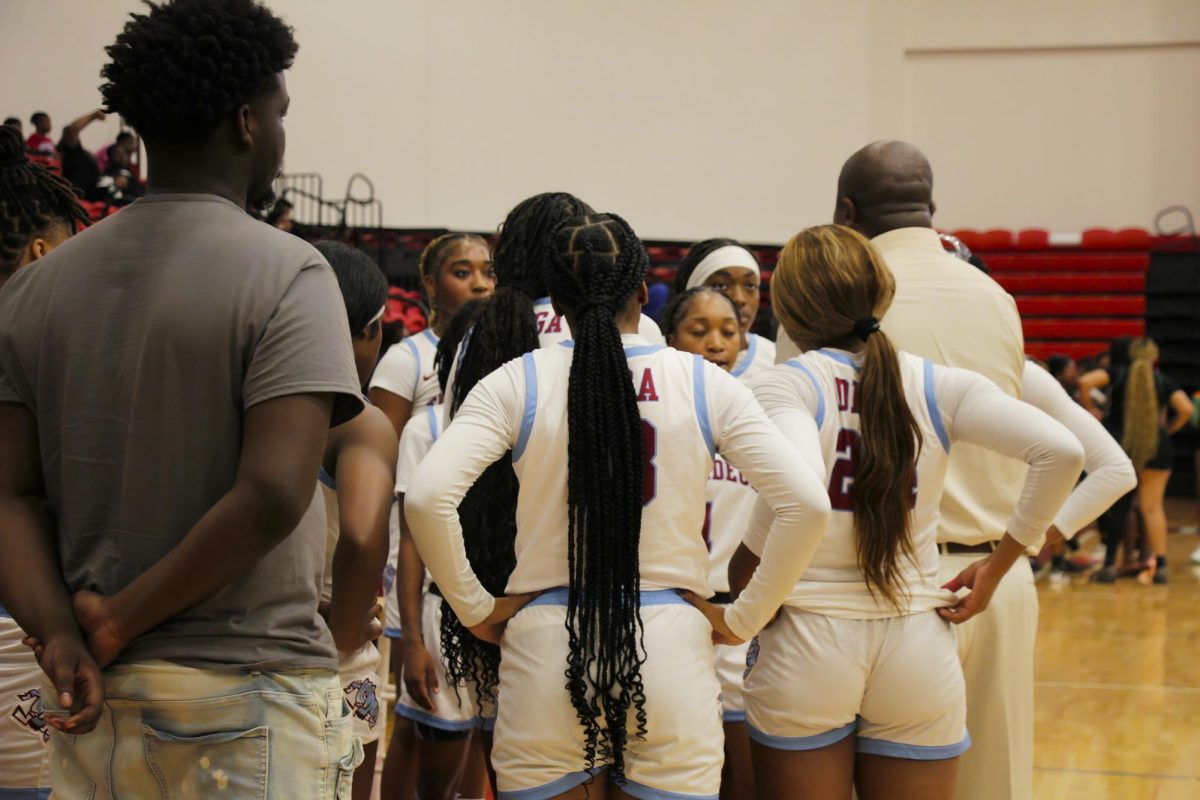





Black women have long existed in academic spaces, teaching, advising, and mentoring at institutions in ways that many people may overlook. Sometimes their impact is made quietly; however, that does not undermine how their influence and guidance remain consistent and deeply engraved in the lives of many students, helping to guide and inspire them throughout their collegiate experience.
At Talladega College, that presence is not only felt but reflected in the numbers. Women make up approximately 46% of the institution’s full-time faculty (statistics provided by the Talladega College HR department), a figure that speaks to both their presence and influence within the Talladega community.
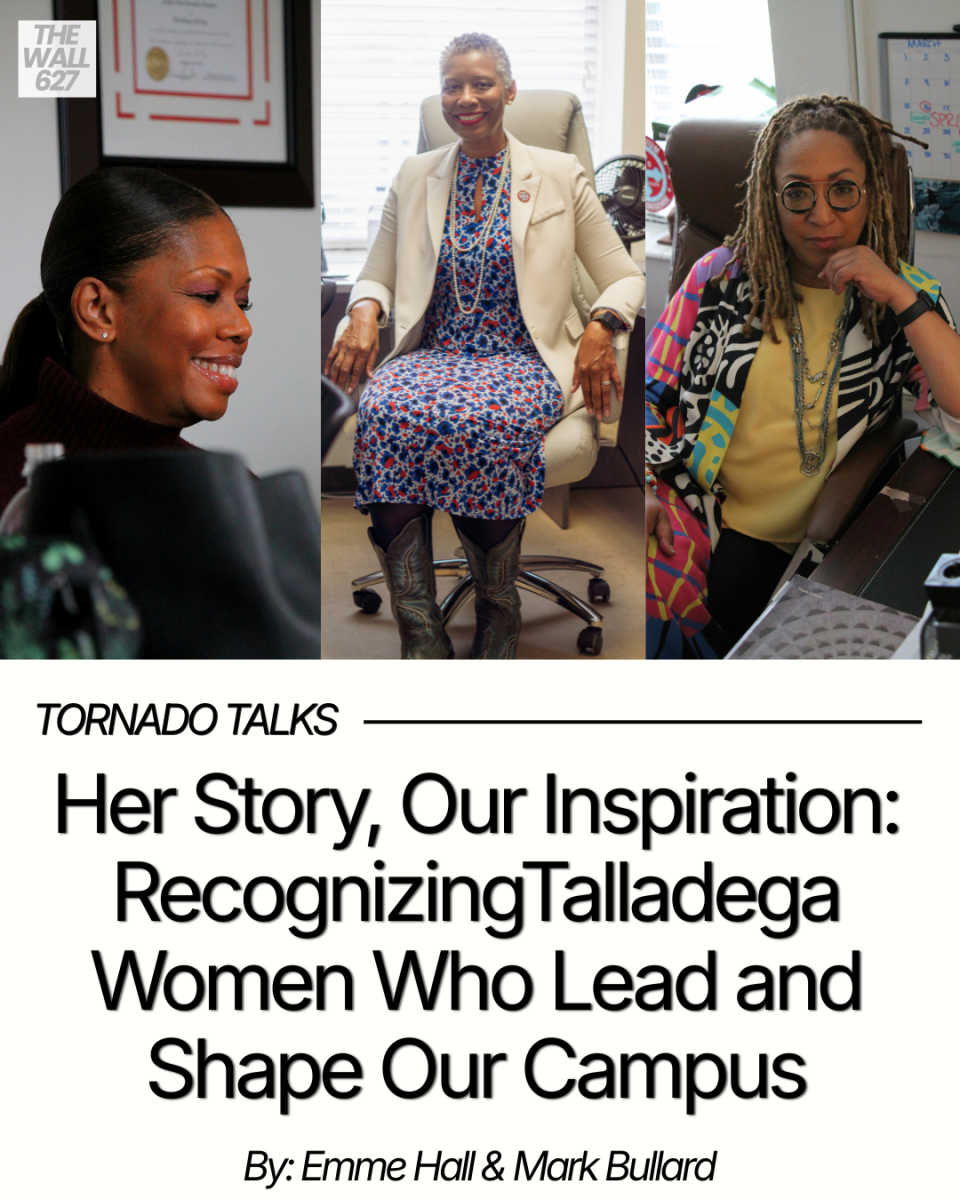
Still, beyond the statistics, their contributions extend far deeper—into the culture, growth, and everyday experiences that define our institution. In this editorial, we highlight three women whose stories reflect not only their professional journeys, but also the depth, complexity, and humanity of being a Black woman in higher academia today.
One Talladega student, Kendra Burkes, a senior business major from Anniston, Alabama, highlights two female professors who have played a significant role in guiding her collegiate journey. Mrs. Amanda Haywood Cotton, an English professor, supported her in her self-discovery and helped her come to terms with her ADHD. Additionally, Dr. Peterson, Dean of the School of Humanities and Fine Arts and Interim Director of Graduate Studies, has been instrumental in helping Kendra secure an entry-level position as she prepares to enter her post-graduate life.
Many other Degans can also recall the female faculty and staff who have poured into them, leaving lasting impacts on their academic and personal growth.
We were able to sit down with Professor Rachelle Williams, Dr. Angela Walker, and Dr. Cheryl Jenkins for a series of conversations that extended beyond a traditional interview. Over the course of three days, we spoke with them on a variety of topics, including what inspired their journeys into academia, the challenges they’ve faced as Black women, the advice they would offer to younger generations, and who they are beyond their professional titles.
Rather than a traditional question-and-answer format, these conversations unfolded more naturally—creating space for reflection, honesty, and depth, and allowing each woman to share not only her experiences, but her perspective, identity, and voice.
Dr. Cheryl Jenkins
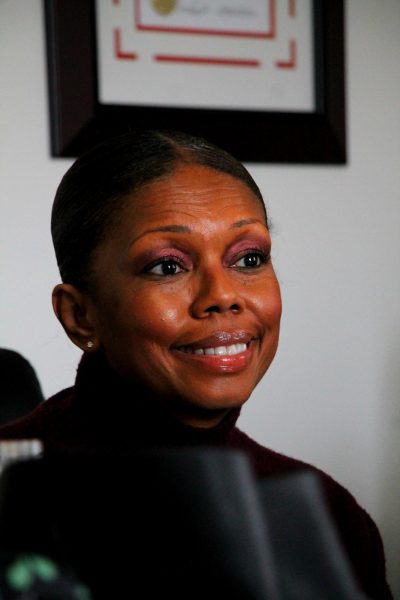
We began our conversations with Dr. Cheryl Jenkins in her large, sun-filled office. The walls were lined with framed degrees, minimal yet purposeful, with a few personal touches that hinted at her love for storytelling and media.
Cheryl Jenkins grew up in Laurel, Mississippi, in a family where education was central—her mother taught for 36 years, and her father worked in radio and television. “I honestly didn’t plan to teach,” she said, recalling her early days. She started in media production, struggled in her first class, and eventually found her way into journalism, where she fell in love with the field. Her professors, particularly Barbara Shoemake at the University of Southern Mississippi, played a pivotal role, encouraging her to pursue her doctorate—a step she might never have considered on her own.
Since joining Talladega College in the spring of 2024, Dr. Jenkins has taught courses in critical media studies, theory, and history, while mentoring countless students. Her research examines the representation of Black people in media, reflecting her dedication to understanding the impact of cultural perspectives on journalism and media in general.
Her fascination with the ways Black women navigate independence also shaped her thinking during her doctoral studies. “Watching the film Waiting to Exhale made me realize how much my generation was carving its own path, pursuing careers and autonomy in ways my mother’s generation hadn’t,” she reflected. This awareness quietly informed her research interests and teaching, even as she focused on media representation and the broader dynamics of journalism.
Being a woman in academia comes with unique challenges. “Women professors are often seen as nurturers,” she said. “While many of my male colleagues are able to focus more directly on research and grants, I spend hours mentoring students. It’s meaningful work, but it’s not always recognized in promotions. Still, the relationships I build and the guidance I provide make it worth it.”
Outside of the classroom, Dr. Jenkins describes herself as “still a learner, curious about life, and empathetic.” She enjoys attending concerts, spending time with friends, and embracing the lighter side of life. “I’m not always as serious as my colleagues may think,” she says. “I love to have a good time—even be a little silly. Sarcasm is my second language.”
When asked what advice she would give to younger Black women pursuing careers in academia or media, she offered:
“Don’t be afraid to claim your space and your voice. Follow what excites you, even if it doesn’t look like everyone else’s path, and remember that mentoring others is part of your power.”
Professor Rachelle Williams
The next day, we sat down with Rachelle L. Williams in her cozy office on the ground floor of Seymour Hall. Her space was warm and inviting, lined with shelves of books and adorned with Delta Sigma Theta Sorority, Inc. memorabilia, as well as decor that reflected her alma mater, Talladega College—the Alpha Lyrae Vega of them all.
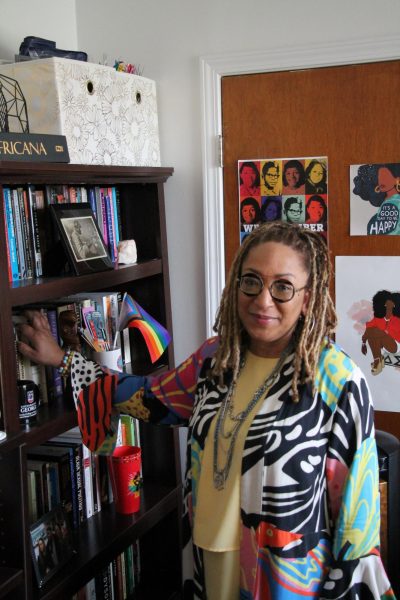
Ms. Williams, originally from Atlanta, Georgia, has been a faculty member in the School of Humanities and Fine Arts for three years. She is Director of the Dr. Jewel Plummer Cobb Honors Program and an Assistant Professor of Humanities. As an undergraduate, she thought she would become an attorney, but her first teaching assistant position in the African-American Studies department at the University of Maryland, College Park, revealed a love for teaching—combining research with the opportunity to share knowledge—and she knew this was the path for her.
Education runs in her blood. Ms. Williams comes from a family of mostly K–12 educators. Her mother is a retired elementary school teacher and principal, and her father was an Associate Georgia State Superintendent of Schools who also taught college courses. Her lineage includes trailblazers like her great-great-great-great-aunt Lucy Craft Laney, the first Black woman to have a portrait hung in Georgia’s state capitol. Ms. Williams’ father encouraged intellectual curiosity from a young age, taking her and her sister to lectures, documentaries, and symphonies.
Academia for Ms. Williams has been about exploration as much as specialization. She began a PhD in ethnomusicology, studying music as a lens into culture and society, before transitioning to women’s studies to focus on the biographies of Black women in music and art. This shift eventually led her to pursue an MFA under the guidance of Valerie Boyd, the acclaimed journalist and biographer of Zora Neale Hurston. Boyd recognized Williams’ interest and encouraged her to apply to the University of Georgia’s Narrative Nonfiction program in the Grady College of Journalism and Mass Communication. “My acceptance into this program was life-changing,” Williams recalls.
Beyond the classroom, Ms. Williams fosters meaningful connections with her students, balancing mentorship with professionalism. A lifelong music lover, she enjoys listening to jazz and going to concerts. She is also an avid reader and loves going to museums and journaling. Ms. Williams also keeps up with social media about pop culture to stay connected with her students, and she also enjoys indulging in reality TV for anthropological and sociological insights. These passions inform her teaching, giving students insight into both the subject matter and the creative, intellectual processes behind it.
When asked what advice she would give to younger Black women navigating their careers, Ms. Williams said:
“Don’t let people make you think that career paths and graduate school paths are straight lines. They’re not. They’re jagged, and you should embrace that. Follow what genuinely interests you and stay curious.”
Whether mentoring, teaching, or writing, Ms. Williams’ life and work reflect a deep familial legacy in education, a passion for cultural study, and a commitment to shaping minds with care, integrity, and encouragement for the next generation. Though she does not have biological children, she embraces a maternal role in her students’ lives, and countless students have credited her for providing guidance, support, and a positive example of a strong, nurturing Black woman navigating her own path—proof of the lasting impact she has beyond the classroom.
Dr. Angela Walker
Dr. Angela Walker, a tenured professor in the English Department at Talladega College, has spent over a decade shaping minds while modeling a life of curiosity, faith, and resilience. Born in Mobile, Alabama, and raised in Daphne on the Gulf Coast, she grew up in a close-knit community where family, faith, and education were central. From an early age, she was inspired by her mother’s fearless devotion as a widow raising two children, learning firsthand the power of discipline, prayer, and principled guidance. These early lessons would become the foundation of her lifelong commitment to mentoring young women and students from diverse backgrounds.
A lifelong learner, Dr. Walker’s journey in higher education began in student affairs, from working in residence halls to full-time roles at community colleges. Her transition to Talladega College marked her first experience at an HBCU and a private institution, allowing her to work with students who shared her background as a first-generation, low-income African-American woman. Over the years, she has held numerous leadership roles, including department chair, dean, and faculty representative on the Board of Trustees, demonstrating her dedication to both administrative excellence and student success.
Beyond her professional achievements, Dr. Walker is deeply invested in her students’ personal growth. Former and current students frequently credit her as a strong maternal figure, a trusted mentor, and a source of unwavering guidance. She recalls a former student naming her child in part after Dr. Walker—a testament to the profound and lasting impact she has on those she teaches. Known for her balance of honesty and compassion, she embodies the philosophy that truth and love are not mutually exclusive: students learn from her through both rigorous academic mentorship and genuine care for their well-being.
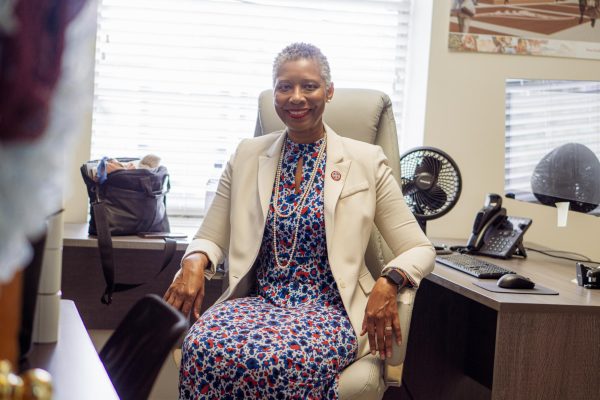
Outside of Talladega, Dr. Walker leads a vibrant and grounded life. She serves as a minister at Shiloh Baptist Church in Sylacauga, Alabama, where her husband is the pastor. She is also a devoted wife, and the couple is celebrating 26 years of marriage. Fitness, cooking, and travel are central to her personal rhythm—she is training for a marathon, enjoys creating Mexican dishes and perfectly prepared dry beans, and has explored destinations such as Norway, the Bahamas, and Italy, while also enjoying road trips across the U.S. These personal passions feed her professional life, infusing her teaching with energy, curiosity, and cultural awareness.
When asked for advice for young Black women navigating academia and life, Dr. Walker emphasizes self-awareness, confidence, and faith. She reflects on Jeremiah 29:11, saying: “I know the plans that I have for you. They are good and not evil to give you a hope and a future.” She elaborates: “Know who you are and walk in confidence, because I don’t care where you go in life…you got to have some confidence. You got to know who you are…walk in confidence, and seek the Lord about it.” Her approach blends practical mentorship, faith, and a commitment to uplifting others—ensuring that those she guides leave not only more knowledgeable but also more confident, resilient, and inspired to make a difference.
CONCLUSION
Although three completely different women, Dr. Jenkins, Ms. Williams, and Dr. Walker, each leave a profound and lasting mark on their students’ lives. Through their teaching, mentorship, and personal guidance, they embody the power of representation, care, and integrity in ways that extend far beyond the classroom. Each woman brings her own unique perspective, whether rooted in academic rigor, genuine personal connection, or lived experience, yet they all share a common commitment to uplifting and empowering the next generation.
Their impact is not only seen in grades or degrees earned, but in the confidence they instill, the resilience they nurture, and the sense of purpose they help students discover within themselves. For many, they serve as mentors, role models, and even maternal figures, offering both truth and support in spaces where students are still learning who they are and who they are becoming.
In a world that is constantly evolving, the presence of women like Dr. Jenkins, Ms. Williams, and Dr. Walker serves as a reminder that education is more than instruction, it is transformation. Their influence continues to ripple through the lives of their students long after they leave Talladega, shaping futures, strengthening communities, and inspiring others to walk boldly in their own paths.