





In 2022, OpenAI released a public research preview based on its GPT-3.5 model called ChatGPT, and the world caught fire. In the three years since then, AI has proliferated to such an extent that concerns have arisen about whether an AI bubble may be forming, similar to the dot-com bubble of the late 1990s. It is no understatement to say that AI is everywhere, embedded in nearly every app, including many that did not need it to begin with, changing the way we interact with our devices and, soon enough, with each other.
In just three years, an incredibly short amount of time given the scale of change, always-listening AI “companions” have emerged, the world’s first AI minister has reportedly become “pregnant” and announced plans to have 83 children, and Intel’s former CEO is building AI intended to accelerate the second coming of Christ. At the same time, early techniques for translating thoughts into text using AI have been developed, expanding possibilities for individuals with disabilities.
AI models are now helping scientists design antibodies, a capability highlighted by research from the Baker Lab, and redefining the way we fight disease. AI, it seems, is both the disease and the cure. Techno-optimists view this progress as evidence that AI’s rise could usher in a utopia. On the other end of the spectrum, pessimists, often referred to as doomers, argue that none of this matters if a superintelligent AI ultimately threatens human survival. Reality is far more complicated and, judging by Silicon Valley’s history, likely leans closer to the dystopian side.
Technological advances, while often beneficial, have historically deepened inequalities between those who profit and those who bear the consequences. History makes this clear. The cotton gin accelerated the Industrial Revolution and enriched white enslavers while tightening slavery’s grip and worsening life for enslaved Black people. More recently, in 2022, reporting from Time Magazine revealed that Kenyan workers, paid less than two dollars an hour, were tasked with filtering some of the most disturbing content on the internet to make ChatGPT safer.
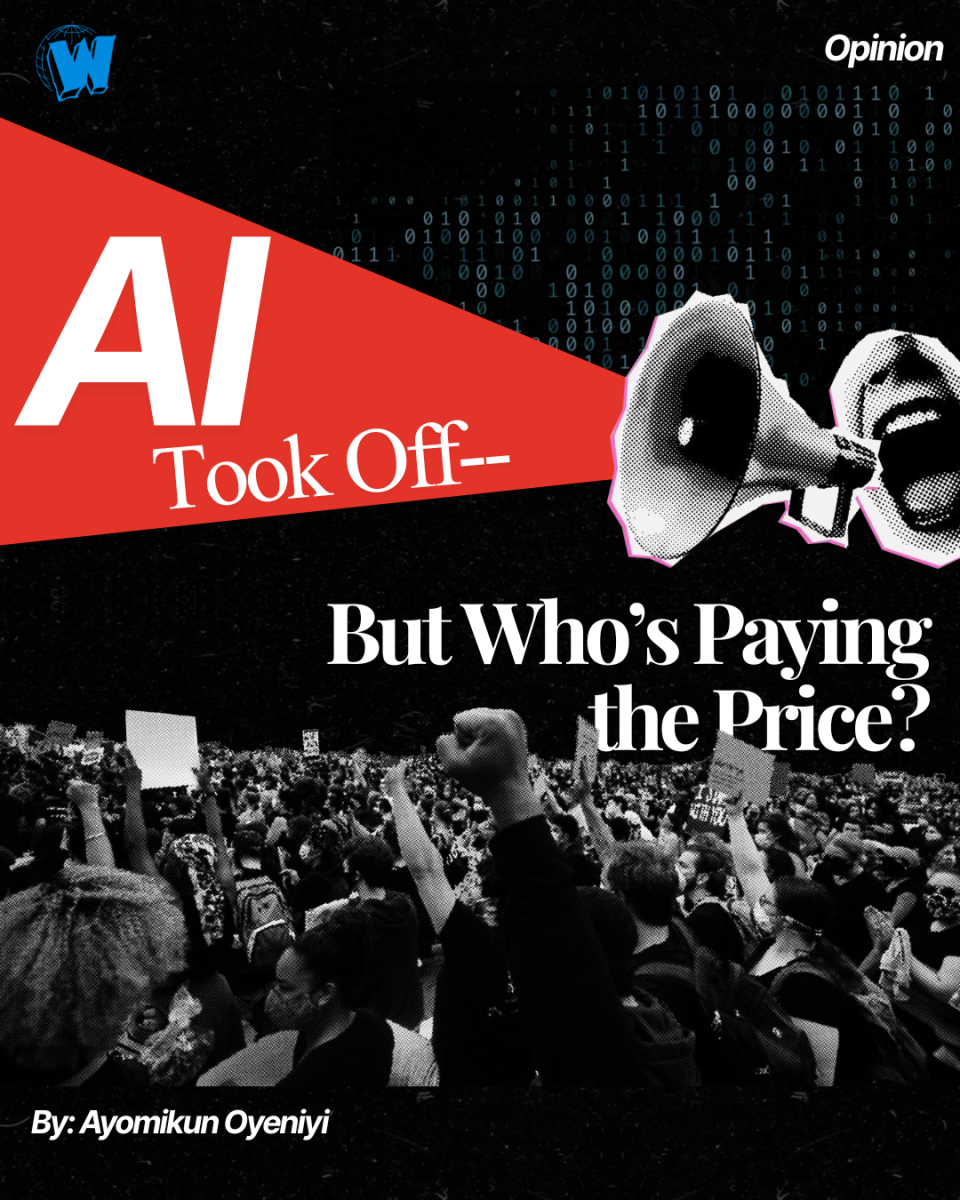
For a technology capable of producing such polarized outcomes, there has been surprisingly little discussion about its specific costs and consequences for Black communities. This article aims to help change that.
To fuel the AI gold rush, companies have rapidly expanded the physical infrastructure required for advanced artificial intelligence, particularly data centers. These facilities are essential because training and operating cutting-edge AI models requires enormous amounts of computing power. One analysis from Epoch AI notes that a single large model can consume more electricity than an entire neighborhood. Data centers are the only locations equipped with the specialized hardware, storage systems, and energy capacity needed to support that scale of workload. Because of their immense power and cooling demands, companies often locate them in regions where electricity is cheaper, such as Memphis, Tennessee.
xAI, the artificial intelligence company founded by Elon Musk, began leasing a former Electrolux factory in Memphis in March 2024 to build one of the world’s largest supercomputers, Colossus. Colossus now helps power Grok 4, one of the most powerful language models available. However, this achievement comes with consequences. Reporting from the Tennessee Lookout found that the facility is fueled by thirty-five gas turbines releasing formaldehyde and nitrogen oxides into the air. Average nitrogen dioxide levels in surrounding neighborhoods have increased by several percentage points, while Time Magazine reported that peak concentrations rose by nearly 80 percent in the most affected areas.
These pollutants pose serious respiratory risks in a city that already struggles with air quality. The Asthma and Allergy Foundation of America ranks Memphis second in the nation for asthma-related emergency department visits and seventh for asthma-related deaths, largely due to decades of industrial activity. Residents describe a persistent smell of gas in the air. In an interview, Tierne Kimble, a Memphis native and student at Talladega College, said she feels her community is repeatedly chosen to host projects that undermine its health. From the outside, it is not difficult to see how Memphis, in its pursuit of economic development, may be jeopardizing the long-term wellbeing of its own citizens. Despite ongoing complaints, xAI has continued to scale up operations, purchasing an additional one-million-square-foot site for Colossus earlier this year.
About two months ago, OpenAI released the Sora app, powered by its second-generation text-to-video model. The launch unleashed a wave of hyperrealistic videos across the internet, ranging from historical reenactments to surreal wildlife clips. The app also allows users to generate videos containing copyrighted material unless rights holders request an opt-out. This follows earlier concerns when users of OpenAI’s GPT-4o model produced large volumes of artwork in the style of Studio Ghibli. After a surge in user activity, OpenAI announced it would begin blocking attempts to mimic the styles of living artists, a move widely covered by Business Insider. Still, the effectiveness of these limits remains questionable, as generating Ghibli-inspired imagery continues to be relatively easy.
Other AI image and video generators follow a similar pattern, imposing few restrictions on what users can create. This lack of guardrails has sparked widespread concern. The estate of Martin Luther King Jr., for example, recently criticized what it described as disrespectful depictions of King in AI-generated videos. In the weeks following Sora’s release, he appeared in numerous deepfakes saying or doing inappropriate things. OpenAI eventually banned such generations, announcing in coordination with the King estate that it would pause depictions of Dr. King while strengthening safeguards related to historical figures.
Although many of these videos may appear to be trivial internet jokes, their potential harm is significant. In an increasingly digital world, AI deepfakes can distort historical memory and reshape public perception of influential figures. Digital blackface has also become more prominent. The Guardian previously reported on Meta’s AI-generated “creator” personas on Instagram and Facebook, including one named Liv, described as a “proud Black queer momma of two,” whose development team was later revealed to be predominantly white. Following public backlash, Meta removed the personas, though users can still create AI chatbots modeled after themselves.
This article does not aim to decry AI progress. Rather, it seeks to raise critical questions. AI is a technology capable of fundamentally changing the world and ushering in a wave of prosperity unlike anything seen before. It could cure cancer, take humanity to space, help address climate change, reduce the impact of aging and disease, and solve countless other challenges. But will the healthcare advances enabled by AI be affordable to the working class? What does the future of work look like for marginalized communities as automation threatens widespread job displacement? Should the pursuit of a theoretical technological utopia come at the expense of the people living today?
AI labs and companies continue to move at full speed, often paying little attention to the ethical consequences of their actions, while government regulation lags far behind. Philosopher Bernard Stiegler once noted that technological innovations are never without political and social implications. The question remains: how do we decide who bears the consequences?