
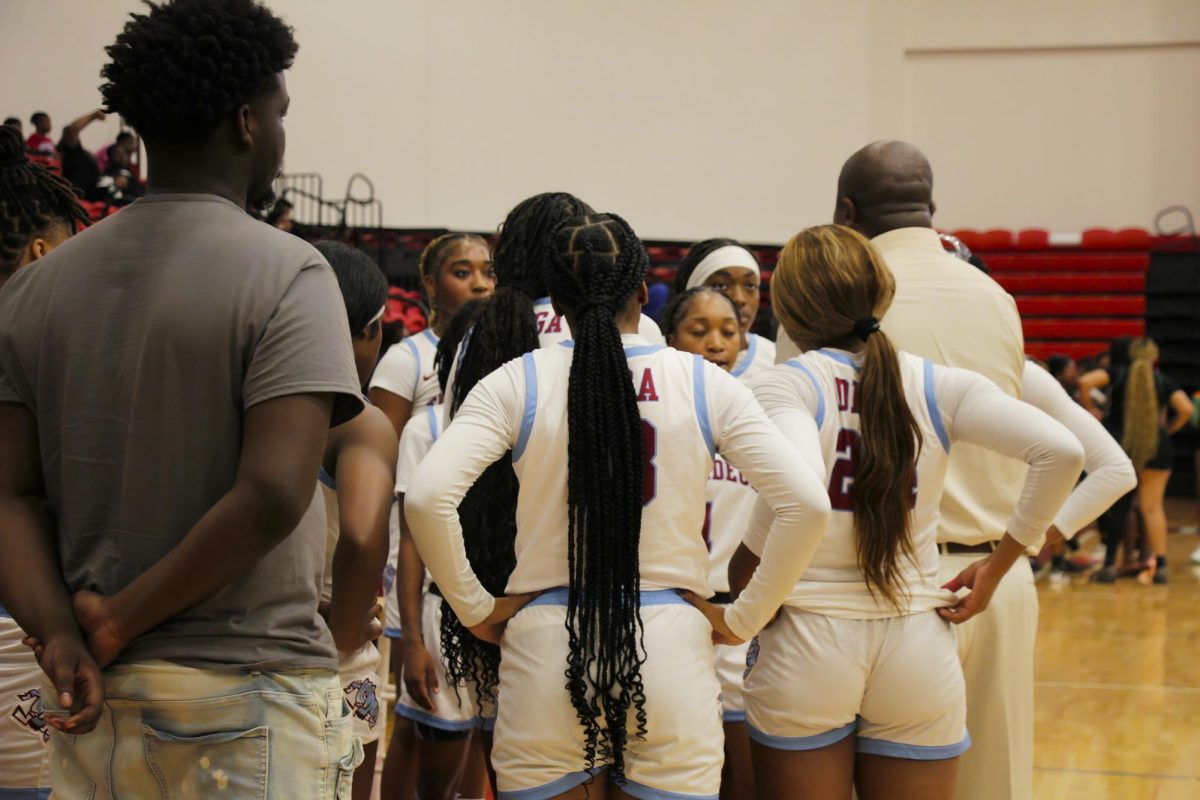





As basketball season approaches its close, The Wall 627 had the opportunity to sit down with all three basketball programs on campus during the height of their season to reflect on growth, teamwork, and agility both on and off the court.
Women’s Basketball: Building Belief, Game By Game
We began with the Talladega College women’s basketball program, currently standing at 11–4 after a significant turnaround from last season’s 10–12 finish. Led by Athletic Director and Head Coach Andre Payne, the program has shifted from rebuilding to redefining expectations. We sat down with Coach Payne alongside three standout players to reflect on progress, team chemistry, and the vision guiding the season forward.
When asked how they remain committed to both individual growth and team success, the women’s basketball program consistently pointed to discipline, confidence, and collective accountability as the foundation of their resurgence.
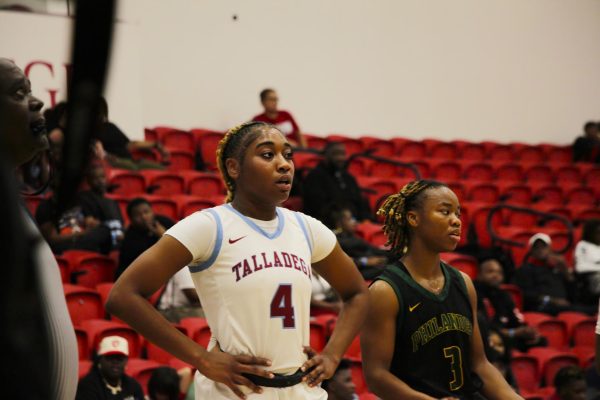
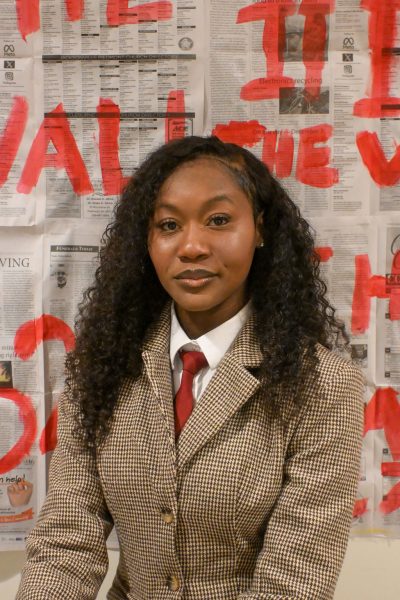
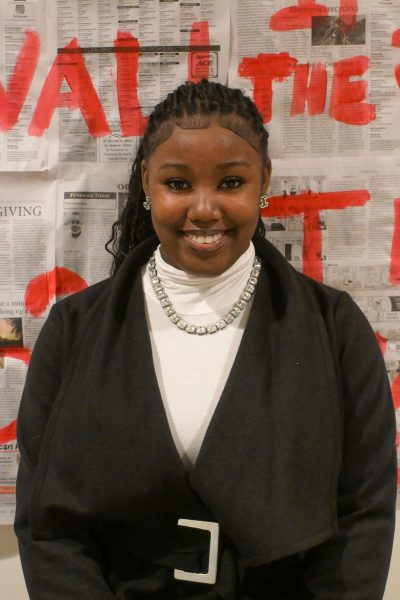
Senior forward DeJaria Lewis, hailing from Montgomery, Alabama, emphasized that improvement extends beyond scheduled practices. “I work out outside of practice,” Lewis shared. “I try to do extra shots—with my teammates, by myself, or with my assistant coaches.” Balancing early mornings, classes, and multiple practices throughout the day, Lewis also highlighted the importance of mental preparation, noting that she journals to “get negative things off my brain.” For Lewis, success is ultimately measured in unity. Winning a championship, she said, would represent “something we did together.”
For Kiersten Usher, a junior biology major from Lithonia, Georgia, balancing academics and athletics requires discipline that begins before sunrise and often stretches late into the night. Reflecting on the lessons basketball provides beyond the court, Usher explained, “How we are on the court is how we’re going to be in the real world.” She shared that the confidence she builds through basketball directly fuels her professional aspirations, reinforcing the belief that growth as an athlete translates into growth as a future professional.
Senior business marketing major Kameron Jones from Matteson, Illinois, spoke candidly about accountability within the team. “My mistakes and things I don’t work on eventually hurt the team,” Jones said. She described a close-knit environment where reflection is a shared practice, adding that the team makes an effort to “try not to take anything too serious,” allowing players to remain grounded, focused, and connected throughout the season.
After a challenging first year, Coach Payne reflected on the circumstances that shaped last season. “I got the job in August, so I didn’t have an opportunity to recruit any student-athletes,” he said. “I had to take what was left here.” Despite those limitations, the team began to improve late in the season, laying the groundwork for the progress seen this year.
Now in his second season, Payne credits continuity and culture as key drivers of the team’s success. “These young ladies have played for me a year now,” he explained. “They know the expectation. They know the culture of the program.”
One of the most notable changes has come on the offensive end. While the team ranked among the top defensive units nationally last season, scoring proved to be a challenge. “Last year, we averaged 53 points a game,” Payne said. “This year, we’re averaging almost 70.” That balance between defense and improved scoring has allowed the team to compete more consistently.
Evaluating performance so far, Payne remains focused on growth rather than comfort. Rating the team “about a five” on a scale of one to ten, he emphasized the need for greater consistency in half-court offense. “We’re scoring better, we’re defending well,” he said, “but we’re not as consistent in the half-court as I would like.”
Beyond wins and losses, Payne stressed the importance of academic excellence. His goal is for the women’s basketball team to maintain the highest GPA in the athletic department, with each student-athlete earning at least a 3.0. On the court, the vision is clear. “We plan to win the championship,” Payne said. “We want to win the Eastern Division, the conference tournament, and get to the NAIA National Tournament.”
At the core of the program is a team-first approach to development. “What you’re okay at, we’re going to try to make you good,” Payne explained. “What you’re good at, we’re going to try to make you great.” Individual growth, he emphasized, only works when rooted in a shared defensive identity.
For Payne, the most rewarding part of the season has been watching belief take hold. “Seeing them believe that they actually can win,” he said. “That was the toughest part last year.” Now, with confidence growing among players and fans alike, the Talladega College women’s basketball program continues to move forward.
Men’s Basketball: Building Trust, One Possession at a Time
The men’s basketball season did not begin the way many had hoped. A shaky start and an early losing streak tested the team’s confidence, chemistry, and resolve. But at the time of our conversation (11/21/26), the Tornadoes had just secured their first win—an inflection point that marked the beginning of a complete turnaround. Now sitting at 10–6, the program has made a full 180 from the opening stretch of the season, powered by resilience, adjustment, and belief.
With a new coaching staff and several new faces on the roster, the season has been as much about learning one another as it has been about learning how to win. Head Coach Jameus “Coach Stix” Hartsfield, a fresh face on campus but a seasoned leader in the sport, framed the early challenges as necessary growing pains.
“The biggest lesson I’ve learned is one I already knew,” Hartsfield shared. “You’ve got to inspect instead of expect. I expected one thing, but didn’t get the results I needed, so I had to step back and really dive into the chemistry and camaraderie of the team.”
Now in his 18th year of coaching and 12th at the collegiate level, Hartsfield brings a leadership style rooted in honesty and collaboration. He emphasized the importance of accessibility and truth, especially during difficult moments. “I believe an open-door, open-phone policy is best,” he said. “They may not always hear what they want, but they’ll get the truth—and ultimately, that’s what makes them better teammates and better people.”
That philosophy extends beyond strategy and into life itself. For Coach Hartsfield, coaching young Black men is a calling. “It’s not the X’s and O’s I’m most proud of—it’s how I can impact their lives after basketball,” he explained. “When they have those ‘aha’ moments, that’s a win for life, not just for that night.”
On the court, adjustments have followed reflection. The staff recently shifted from full-team practices to smaller group workouts, allowing players to receive more direct feedback and accountability. “A lot of players learn better in smaller settings,” Hartsfield noted. “The more eyes you have on fewer guys, the better results you get.”
That shift has paid dividends, especially in moments of adversity. “What I admire most about this team is their resilience,” Hartsfield said. “We’ve been down in almost every game, but they keep battling back. They choose to fight—and if they keep showing up, the least I can do is show up for them.”
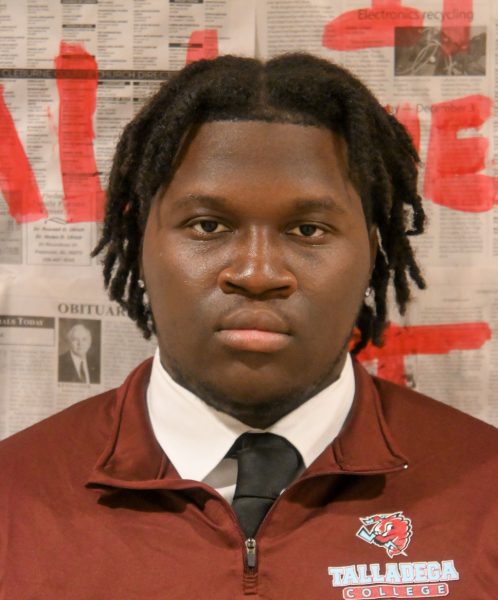
That resilience is felt inside the locker room as well. Arthur Williams, a 6’4 sophomore forward from Mobile, Alabama, echoed the importance of communication and unity when things get tough. “We just talk to each other and make sure we’re on the same page,” Williams said, “We know stuff’s gonna get tough, but everything ain’t gonna be tough forever.”
With five to six returning players and a wave of newcomers, Williams described the team’s bond as intentional and growing. “We embrace the new guys. We try to be one,” he shared. For him, success this season is about balance—on and off the court. “First, I want my degree. Then wherever the ball takes me,” Williams said, adding that maintaining a 3.5 GPA while winning games is a top priority.
Balancing academics and athletics, however, remains one of the biggest challenges. “The grind,” Woods admitted. “You might have early lifts, practice later, then class right after. Making it to class on time—that’s real life as a student-athlete.”
Behind the scenes, Wilfred Campbell, a graduate assistant coach and former Talladega basketball athlete himself, has watched the team evolve through its struggles. “It’s a new team with a new coach, so we’re just figuring out how to play together,” Campbell explained. “Getting that first win was big—now we just build from there.”
Campbell emphasized perseverance as the cornerstone of team culture. “You just gotta keep going and keep working,” he said. “It’s gonna pay off.” That mindset has driven increased intensity in practice and a renewed focus on competing with one another daily. For Campbell, a successful season means alignment. “Playing on one accord, playing our best basketball as a team, and making it to the conference tournament—that’s the goal.”
From staff to players, the message remains consistent: growth is not linear, but it is intentional. What began as a season defined by uncertainty is now one marked by belief, brotherhood, and momentum.
JV Men’s Basketball: Rebuilding with Purpose
At the collegiate level, Junior Varsity basketball serves as more than a developmental roster—it is a bridge. JV programs provide student-athletes with the opportunity to adjust to the speed, structure, and discipline of college basketball while remaining academically engaged and competitively active. At Talladega College, the JV men’s basketball team exists to develop talent, retain students, and prepare athletes for advancement both on and off the court.
First established in 2018, Talladega’s JV men’s basketball program took a brief hiatus during the 2024–2025 academic year before returning for the 2025–2026 season with renewed urgency and direction. Under the leadership of Head JV Coach T.J. “TeeJay” Wilson, the program has reemerged with a clear developmental mission rooted in growth, accountability, and opportunity.
“Even though it’s JV and it seems to be a lower tier, we’re able to get some great scholar-athletes,” Wilson said. “It’s about being able to retain those students, graduate those students, and still give them a chance to play college basketball.” For Wilson, the program’s purpose extends beyond competition—serving as a foundation for future success.
Despite the pause in official competition, Wilson emphasized that the work never stopped. Players remained on campus, continuing to train and attend open gyms while awaiting the program’s return. “They stayed and weathered the storm,” he said. “Watching them work hard not knowing if we were going to have another season—and now that we do, I’m just grateful.”
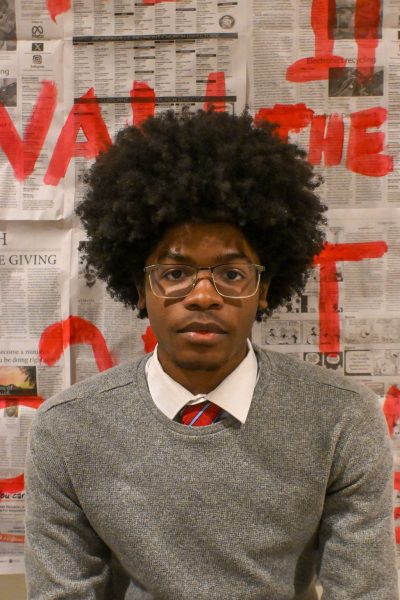
For Jeremiah Turner, a junior who has been part of the program both before and after the hiatus, the difference is evident. “This era, I feel like it’s more urgency,” Turner said. “We trying to prove that we deserve to be on campus.” He described the team’s renewed culture as more connected and less ego-driven. “We gel way more now… less egos, for sure.”
As an upperclassman, Turner has embraced a leadership role, helping guide younger players through the demands of collegiate basketball. “To play with Coach TJ, you really got to want to hoop,” he said. “I’m just trying to show them the ropes—help them out on the small things.”
Sophomore Trenton Smith, new to the JV program this season, echoed that sense of responsibility. “My role is being a leader,” Smith said. “Making sure the young guys keep their heads on straight and see the same vision.” Off the court, Smith emphasized accountability as a cornerstone of team culture. “We hang out, work out together, make sure people get to class and do their homework,” he shared.
For Amarion Bowens, a sophomore from Birmingham, Alabama, discipline has been essential in balancing academics and athletics. “One thing I don’t do is I don’t take naps,” Bowens said. “I use my free time early, because we practice later.” After stepping away from basketball for over a year, Bowens described adapting to a new team and environment as his biggest challenge—but also a source of growth. “Personally, being able to lead more—on and off the floor,” he said. “Athletically, it’s helping me establish my name and get ready for the next level.”
Wilson’s vision aligns closely with his players’ aspirations. “Athletically, I want to see these guys go somewhere,” he said. “The goal is to develop them so they can play at the varsity level.” Equally important is preparation beyond basketball. “One day the ball stops bouncing,” Wilson added. “Hopefully, they’ll have a degree that propels them into the working world.”
When asked what defines a successful season, Wilson pointed not just to wins, but to growth through adversity. “If you never go through any pain, you wouldn’t know what joy felt like,” he said. Watching players experience that breakthrough—when “the light goes off and they get it”—has been among the most rewarding moments of the year.
That gratitude has translated into early success. The JV team finished the season 6–4, navigating the challenges of youth, chemistry, and adaptation to the collegiate game. “We’ve got a bunch of freshmen,” Wilson explained. “College basketball is faster—everybody’s good. So it’s about helping them adapt.”
As the JV men’s basketball program continues its return, it stands as a testament to patience, perseverance, and purpose. Built not just to compete, but to prepare, the program remains a vital part of Talladega College athletics—developing student-athletes.